How to Freeze Your Credit: A Free Step-by-Step Guide
Quick Answer
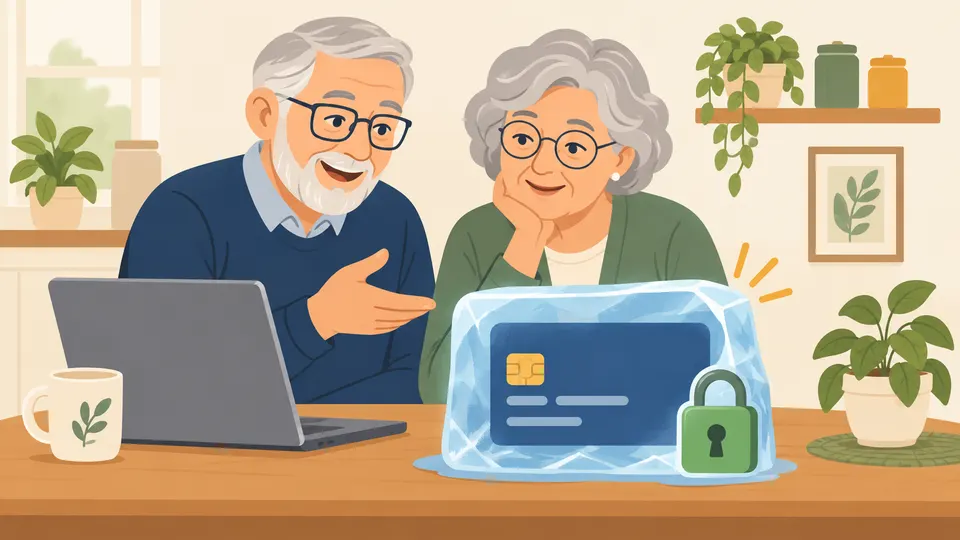
To freeze your credit, contact Equifax, Experian and TransUnion, one at a time, through each bureau's official website or phone line. A freeze is free. It stops anyone from opening a new credit account in your name, including a scammer. You can lift it for a short time when you need to apply for credit, then put it back.
On this page
- What does a credit freeze do?
- Does a credit freeze cost anything, and what does it not stop?
- How do I freeze my credit at all three bureaus?
- Freeze, fraud alert or credit lock: which one do I need?
- How do I lift a freeze when I need credit?
- What about my child or a relative who has died?
- What if a scammer already has my information?
- Frequently Asked Questions
- Our Take
- Sources
Key Takeaways
- A credit freeze is free, and anyone can place one, even if their identity has not been stolen.
- You must contact all three credit bureaus separately: Equifax, Experian and TransUnion.
- A freeze does not lower your credit score, and you can lift it whenever you need new credit.
- Start from each bureau's official website. Never use a link or phone number from a text, email or caller.
What does a credit freeze do?
Credit bureaus are companies that keep a file about how you have used credit. Lenders look at that file before they open a new credit card or loan. A credit freeze locks the file so new lenders cannot see it.
The FTC explains it this way: when a credit freeze is in place, nobody can open a new credit account in your name [1]. That includes you, until you lift it. Because most lenders will not give credit without looking at your file, a thief who has your name and Social Security number usually hits a wall.
This matters for scam victims. Many scams try to get your Social Security number, your date of birth or your bank details. If one of them got something from you, a freeze is a calm, free step that limits the damage. It is also a smart step if you have not been scammed at all. The FTC says anyone can freeze their credit report, for any reason.
Does a credit freeze cost anything, and what does it not stop?
It costs nothing. The FTC says there is no cost to place or lift a credit freeze. The Consumer Financial Protection Bureau (CFPB) adds that freezes are free and that you have a right to them by law [2].
Be careful with the word "lock." A credit lock is a similar product that some credit bureaus sell. The CFPB says locks are no more effective than freezes, which are free. You do not need to pay for protection.
A freeze also has limits. The CFPB says it does not affect your credit score. It does not stop companies you already do business with from seeing your file. It does not stop certain government agencies, or companies you hire to monitor your file. And you can still request and review your own credit file.
A freeze only covers new credit in your name. It does not watch your existing accounts. Keep checking your bank and card statements, and call the number on the back of your card if something looks wrong.
How do I freeze my credit at all three bureaus?
The CFPB says you must contact each of the three nationwide credit bureaus separately. A freeze at one bureau does not carry over to the others. Have your ID details ready before you start.
Here is what to do, step by step.
- Open each bureau's official freeze page by typing the address yourself. Do not tap a link in a text, email or social media post. Fake "credit help" pages can look very real.
- Freeze your file at Equifax. Use the official page, Equifax credit freeze [3]. Equifax says you can also manage your freeze by phone at (888) 298-0045 [3].
- Freeze your file at Experian. Use the official page, Experian freeze center [4]. Experian says you can add or remove a freeze by phone at 1-888-EXPERIAN (1-888-397-3742) [4].
- Freeze your file at TransUnion. Use the official page, TransUnion credit freeze [5]. If you prefer the phone, call the number on TransUnion's official freeze page.
- Save each confirmation. The CFPB says you should get written confirmation within five business days. It also explains how to remove the freeze. If a bureau gives you a PIN or password, write it down and keep it in a safe place, not in your email.
The CFPB says a freeze requested by phone or secure online request must be placed within one business day. A request sent by mail can take up to three business days.
Only call a number you found on the bureau's own website. Never call a number that a caller or message gave you, and never pay anyone to "freeze" your credit.
Freeze, fraud alert or credit lock: which one do I need?
These are three different tools, and people mix them up. This table sums up the two free ones, using the FTC's guidance.
A freeze blocks lenders from seeing your file. It lasts until you lift it, and you place it at all three bureaus.
An initial fraud alert is lighter. Lenders can still see your file, but they must check with you before they open new credit. The FTC says it lasts one year and can be renewed. You place it with one bureau, and that bureau must tell the other two. The FTC says anyone who is, or suspects they may be, affected by identity theft can place one.
There is also an extended fraud alert. The FTC says it lasts seven years, and it is for identity theft victims who have an FTC identity theft report or a police report.
For most people, a freeze is the stronger and simpler choice. If you have already had your identity stolen, you can use both. Start at IdentityTheft.gov [6], the FTC's recovery site, for a step-by-step plan.
How do I lift a freeze when I need credit?
You will need to lift your freeze before you apply for a new credit card, a car loan or a mortgage. This is a normal part of using a freeze, not a sign that it failed.
- Ask the lender which bureau it will use. The FTC says to contact the bureau a lender will use and ask it to lift the freeze.
- Lift the freeze at that bureau. Use the bureau's official page or the number from the list above.
- Pick a time window if you can. The CFPB says you can choose a specific period for a temporary lift.
- Put the freeze back afterward. The FTC says a freeze lasts until you lift it, so check that it is back on when you are done.
The CFPB says lifting a freeze is free. Requests made by toll-free phone or secure online request must be honored within one hour. Mail takes longer, up to three business days.
What about my child or a relative who has died?
If your child is under 16, the FTC says you can request a free freeze for them. It stays in place until you ask the bureaus to remove it. The steps are different from the adult steps, so read each bureau's instructions first.
For a relative who has died, scammers can misuse a name that nobody is watching. Each bureau has its own rules and papers it may ask for. Start at the bureau's official website, and do not use a number from an email or a caller. You can also read our what to do if you've been scammed guide if you are not sure where to start.
What if a scammer already has my information?
A freeze helps most when your Social Security number or date of birth got into the wrong hands. It does not undo a scam that already happened. If you shared your Social Security number, follow the steps in what to do after sharing your Social Security number. If you think someone used your identity, go to IdentityTheft.gov [6] for the FTC's recovery plan. Then report the scam. Our guide on how to report a scam lists where to go.
Secure your accounts too. Two-step verification makes it harder for someone to take over your email or bank account, even with a stolen password. Not sure if a message is real? Use our guide to check if something is a scam, or the red flag checklist. More ways to stay safe are on our protect page.
Frequently Asked Questions
Will a credit freeze hurt my credit score?
No. The FTC and the CFPB both say a freeze does not affect your credit score.
Can I still use my credit cards and bank accounts?
Yes. The CFPB says a freeze does not stop companies you already do business with from seeing your file. It stops new lenders from opening new accounts.
Do I need to freeze all three bureaus?
Yes. The FTC says to contact all three, and the CFPB says you must contact each one separately. Each bureau keeps its own file about you.
What if a caller says they will freeze my credit for a fee?
Hang up. A freeze is free. Place it yourself on each bureau's official website, or with the number printed on that website.
Our Take
We think a credit freeze is one of the best free steps an adult can take, and most people never do it. It costs nothing, it does not hurt your score, and it blocks the most common way thieves use stolen details. The hard part is only the hassle of three separate bureaus, so we suggest setting aside one quiet afternoon. Lifting it later takes minutes when you need credit. We would skip the paid "locks" and monitoring offers for now, since the CFPB says freezes are just as effective and free. A freeze is not a cure-all, so keep watching your statements and keep your accounts safe with two-step verification.
Sources
- What To Know About Credit Freezes and Fraud Alerts. Federal Trade Commission, 2026.
- What is a credit freeze or security freeze on my credit report?. Consumer Financial Protection Bureau, 2026.
- Credit Freeze. Equifax, 2026.
- Freeze Center. Experian, 2026.
- Credit Freeze. TransUnion, 2026.
- IdentityTheft.gov. Federal Trade Commission, 2026.
Scam Signals is an independent site, not a government agency. Phone numbers and report links come only from official websites and show the date we checked them. Never call a number given to you in a suspicious message. Spotted an error? Tell us.
More Ways to Stay Safe
Two-Step Verification: What It Is and How to Turn It On
Two-step verification adds a second check after your password. Learn how to turn it on for Apple, Google and your bank, and why you must never share a code.

How to Stop Spam Texts on iPhone and Android
Cut down spam and scam texts for free: forward to 7726, filter unknown senders on iPhone, turn on Android spam protection and report. Plain steps for any age.

How to Block Spam Calls on iPhone: Free Steps That Work
Stop unwanted calls on iPhone with free settings from Apple, your carrier and the FTC. Plain steps for Screen Unknown Callers, blocking and reporting.